
Orlando City Directory Holdings
The Orange County Regional History Center genealogy inventory documents the broadest local shelf. Its Orlando run begins with 1891 and reaches 1998, but it is not continuous. The Brechner Research Center holds the print material on the History Center’s fifth floor and provides free access by appointment. UCF supplies several early books online, while its other digital collections add phone books and funeral records. These access points complement each other.
| Collection | Years | Where Held | Access |
|---|---|---|---|
| Orlando city directories | 1891; 1907; 1912–13; 1921–41; 1943–51; 1953–81; selected years through 1998 | Regional History Center | Free by appointment |
| Orlando Suburban directories | 1969, 1970, 1972–83, 1986 | Regional History Center | Appointment |
| Digitized Orlando volumes | 1907, 1909–10, 1912–13, 1915–16, 1921 | UCF Central Florida Memory | Free online |
| Southern Bell books | Selected 1923 and 1925 issues | UCF STARS | Free online |
| Carey Hand records | 1891–1955 | UCF Special Collections | Searchable online |
Known gaps include 1892–1906, 1908–10, 1914–20, 1927, 1942, 1944, 1952, 1984, 1992, and 1994–96. A catalog gap is not proof that no city directory was printed. It means that another keeper, a nearby year, or a companion source may be needed.
Digitized Orlando Directory Years
The Central Florida Memory text collection is the quickest route into early Orlando city directories. It includes books issued by Clyde R. Miller, Jesse E. Burtz, Orlando City Directory Publishing Company, and Florida-Piedmont. Page counts range from the compact 84-page 1907 book to the 382-page 1921 Orlando and Orange County directory. A scan can be read from its front matter, searched within the file, and compared with the archive’s physical copy.
The digitized 1912 Orlando directory has a catalog page and downloadable scan. That page identifies the publisher and provides a stable source citation for family notes.
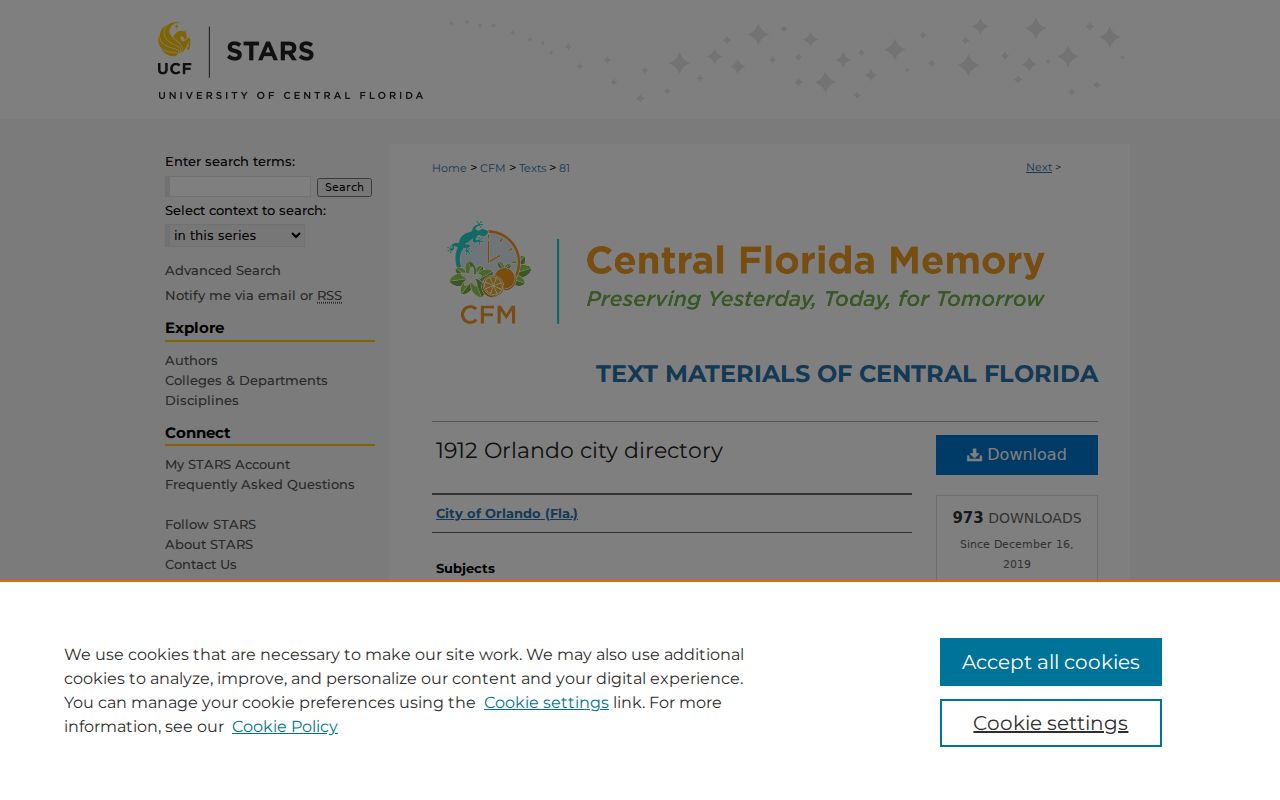
The captured catalog screen shows where the scan and its descriptive record meet, which helps preserve both page evidence and source details.
The broader collection index is also worth opening before assuming only one year survives.
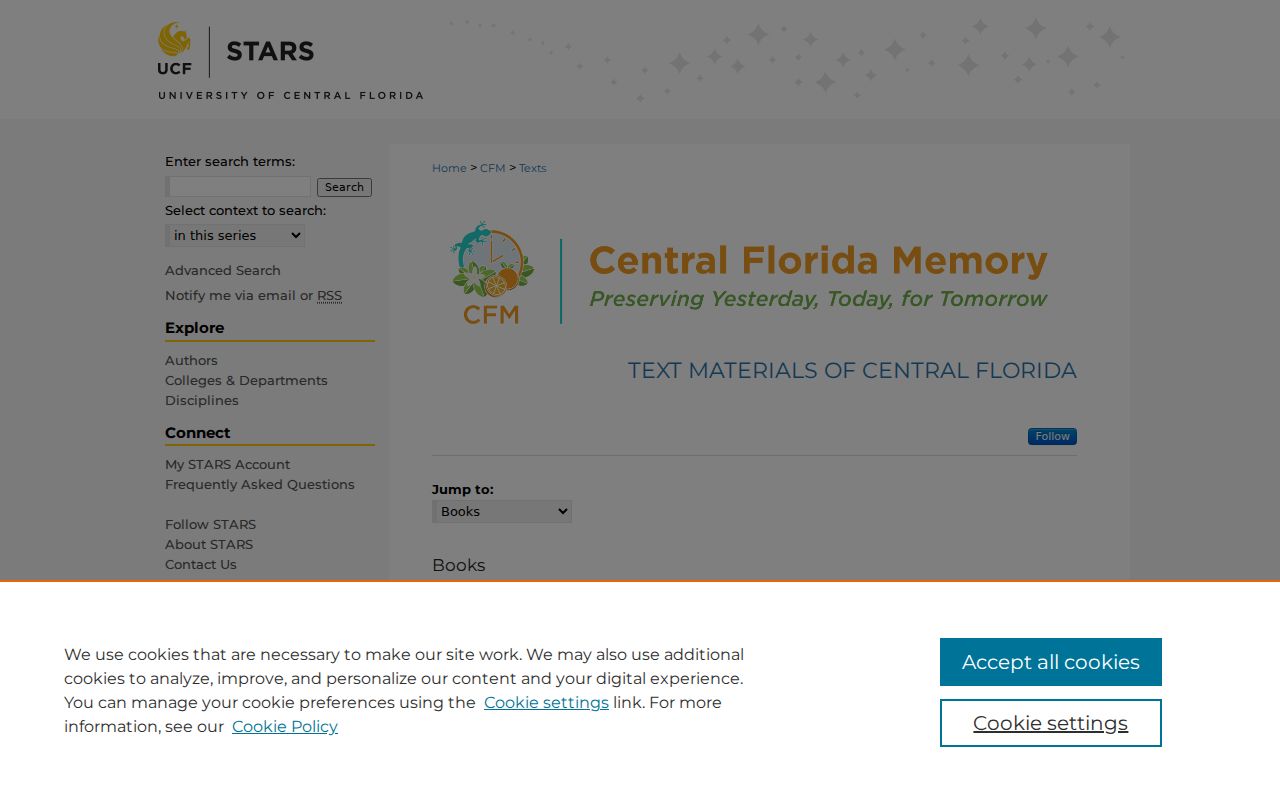
Its grouped view makes neighboring editions easier to spot when one directory year is absent or a surname changes form.
Note: Search scans with several spellings, since old type, faint pages, and optical character recognition can hide an exact match.
Orlando Directory Publisher Timeline
Publisher changes help date an undated leaf and explain why layout or abbreviations shift. Orlando’s known line starts with Clyde R. Miller in 1907. Jesse E. Burtz issued the 1909–10 book. Orlando City Directory Publishing Company, with Wike named as a contributor, followed in 1912. Florida-Piedmont published the 1915–16 and 1921 editions, and R.L. Polk appears in later street-section evidence and long physical runs.
| Year or era | Recorded change |
|---|---|
| 1891 | Earliest volume catalogued on the History Center shelf |
| 1907 | Clyde R. Miller directory |
| 1909–10 | Jesse E. Burtz directory |
| 1912 | Orlando City Directory Publishing Company edition |
| 1915–16 and 1921 | Florida-Piedmont editions |
| 1938–52 examples | Polk street sections documented in local research |
| 1998 | Latest Orlando volume catalogued at the History Center |
These dates describe known holdings, not the full history of publication. Keep the title page with every extract because the publisher, year, area covered, and entry rules can change from book to book.
Read an Orlando Directory Entry
A real Polk example shows how much can fit in one line. J. Daniel Kolar appeared in 1943 as a company vice president, living with his wife Helen M. at a South Orange Avenue address. By 1949, his real-estate business had a South Main Street address and two telephone numbers. A 1954 entry placed the couple in Ocoee. The changes are dated clues, not automatic proof of each move date.
| Name | Surname, given name or initial, and spelling used that year |
|---|---|
| Family notation | Spouse, widow notation, or another relationship when printed |
| Work | Occupation, title, employer, or business name |
| Place | Residence and sometimes a separate business address |
| Contact | Telephone number where the edition includes one |
Always consult the volume’s own key before expanding a mark. Conventions for residence, home, roomer, or widow vary, and the research did not establish one complete key for every Orlando city directory.
- Criss-cross section
- A later section arranged by street and house number instead of surname.
- Householder index
- An address-led list of the named person associated with a household entry.
- Abbreviation key
- The volume’s guide to shortened jobs, relationships, addresses, and status marks.
Trace Family in Orlando Directories
Annual or near-annual listings can bridge the long gap between federal census schedules. Start with a year tied to a known Orlando event, then move one volume at a time. Copy the entry exactly. An initial, spouse, occupation, or business can separate two residents with the same name. Street sections documented in the 1938, 1941, 1943–44, 1945, 1946–47, 1949, and 1952 Polk books can test whether the same address and nearby house numbers persist.
- Find the surname in the alphabetical section and record plausible variants.
- Copy the full entry, directory title, year, and page.
- Read the abbreviation key before interpreting short marks.
- Check the street-order section for the same house number and nearby entries.
- Move forward and backward by year, noting every change.
- Pair the trail with the 1910, 1920, 1930, 1940, or 1950 census.
If someone vanishes, test several causes. The person may have moved, died, changed a surname, been missed, lived outside the covered area, or chosen not to list. For current address work, the Orlando street directory keeps ownership and occupancy claims separate.
Orlando Directory Research Rooms
The Joseph L. Brechner Research Center is the main physical stop for directories, permit ledgers, voter-registration ledgers, court ledgers, newspapers, maps, phone books, and yearbooks. The archive is free by appointment. Contacting staff before a visit lets them confirm a year, a gap, and any handling rule. The History Center archive began in 1942 and now holds more than 35,000 artifacts, images, and archival objects.
West Oaks Branch Library and Genealogy Center at 1821 E. Silver Star Road in Ocoee adds surname files, family histories, periodicals, PERSI, and Florida genealogy reports. HeritageQuest includes city directories and census material, though an OCLS card or in-library access may be required. UCF Special Collections adds more than 22,000 rare books and prints and over 120 manuscript collections. Researchers should search its finding aids and contact staff ahead.
The UCF digital collections overview leads into local history, university records, and Carey Hand funeral material.
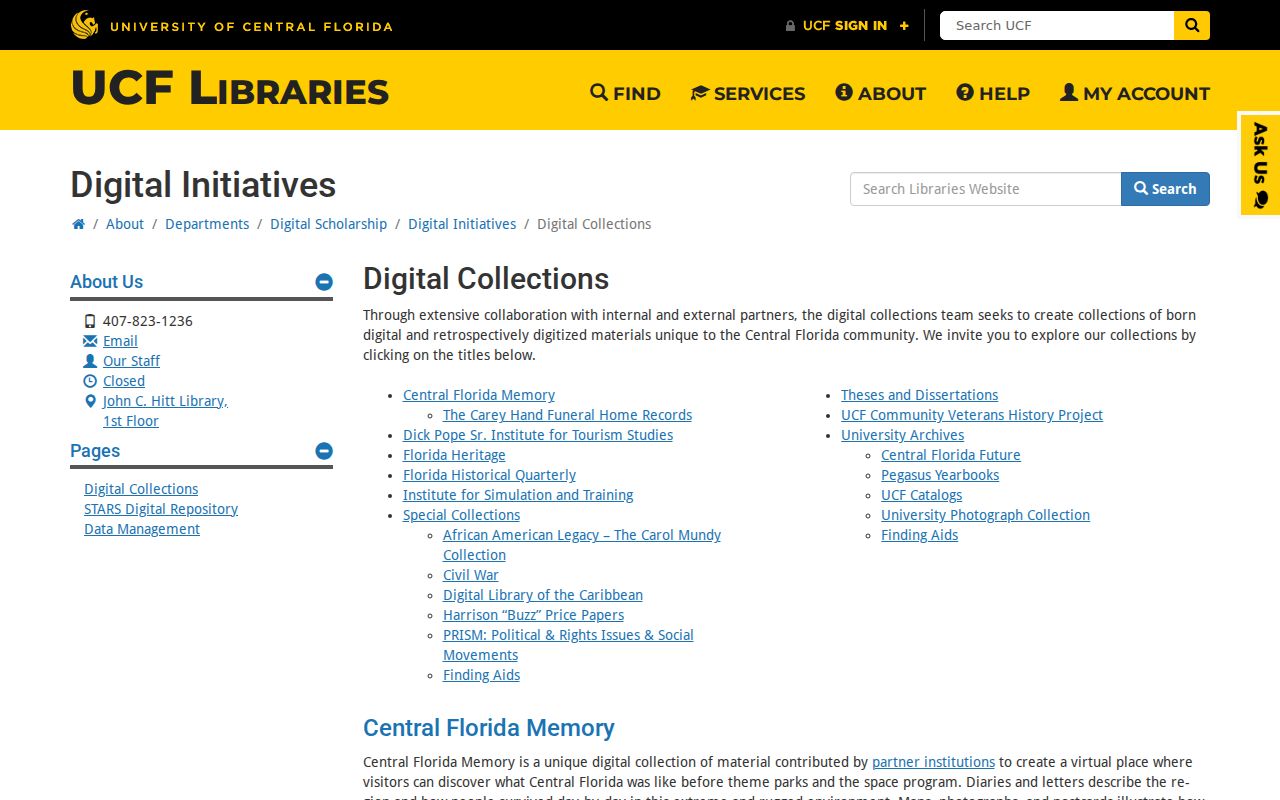
The screen points beyond printed directories to collections that can confirm identity when a city listing ends.
Orlando Directory Companion Records
Telephone books, yearbooks, funeral registers, permit books, and Sanborn maps answer different questions. Southern Bell issues from 1923 and selected 1925 dates add telephone evidence. Orlando High Echo, Las Memorias, St. James Los Recuerdos, Cathedral School Gopher, and Orange Memorial Hospital School of Nursing White Cap yearbooks can place a student or professional group in a narrower setting.
Carey Hand Funeral Home records cover 1891–1955. Search fields include name, gender, race, death date, cause, parents, and burial place. They can explain why a person disappears from an Orlando city directory when a modern vital certificate remains restricted. The 1906–1947 permit ledgers date work on buildings, and the confirmed May 1903 Sanborn set has nine sheets showing footprint, material, and use. Those sources describe a place or event; none should be forced into proving more than it records.
Orlando Community History Harvests
Local digitization keeps growing beyond formal city directory shelves. RICHES History Harvests gather scans and oral histories from community-held sources. Recent projects include Greenwood Cemetery Orlando in 2024 and Parramore Speaks in 2025. Earlier harvests covered Parramore and LGBTQ history in Orlando. These projects may preserve a photograph, church item, family paper, or spoken account that never entered a printed annual directory.
The RICHES History Harvest index shows the range of named community projects.
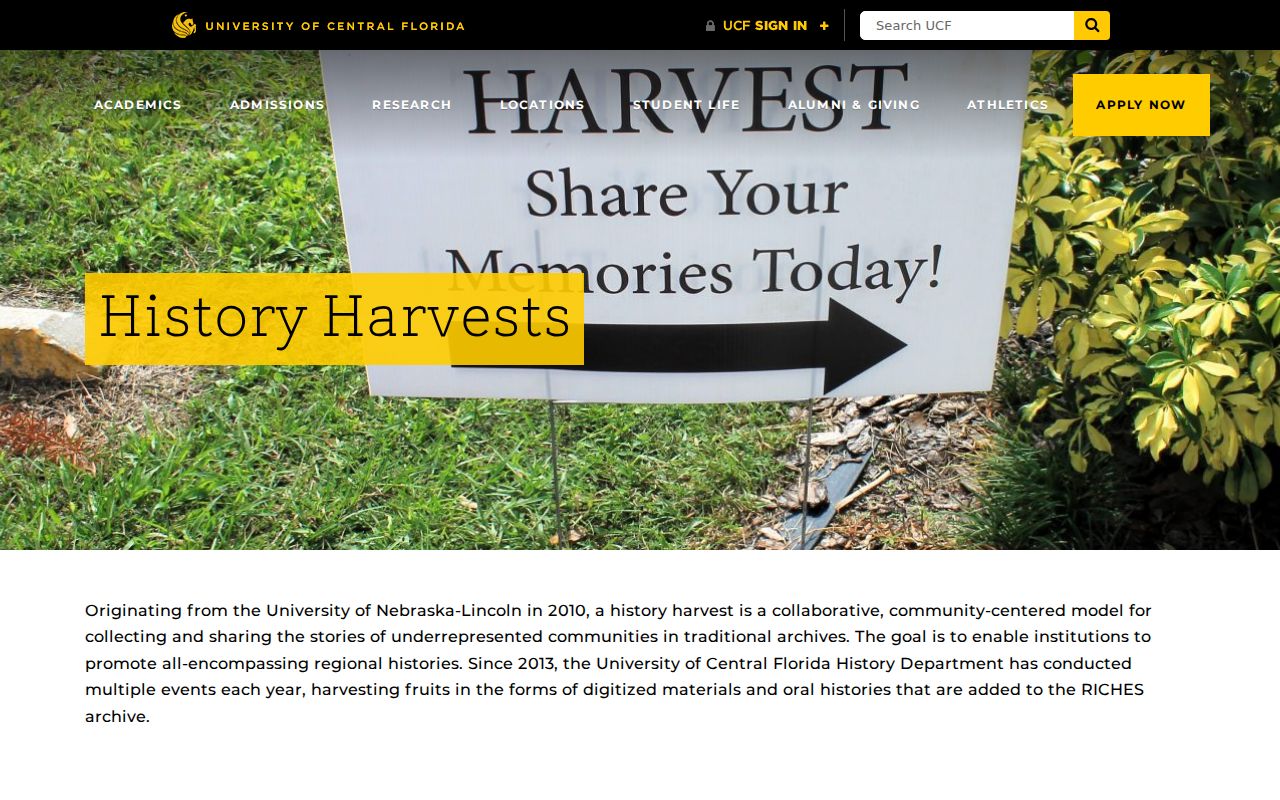
The project list helps a researcher choose a community collection after the printed trail reaches a gap.
Central Florida Memory began as a cooperative project in 2002 and now contains more than 80,000 images. Treat oral histories as accounts to compare with dated records. Together, scans and local testimony restore context that a compact directory line cannot hold.